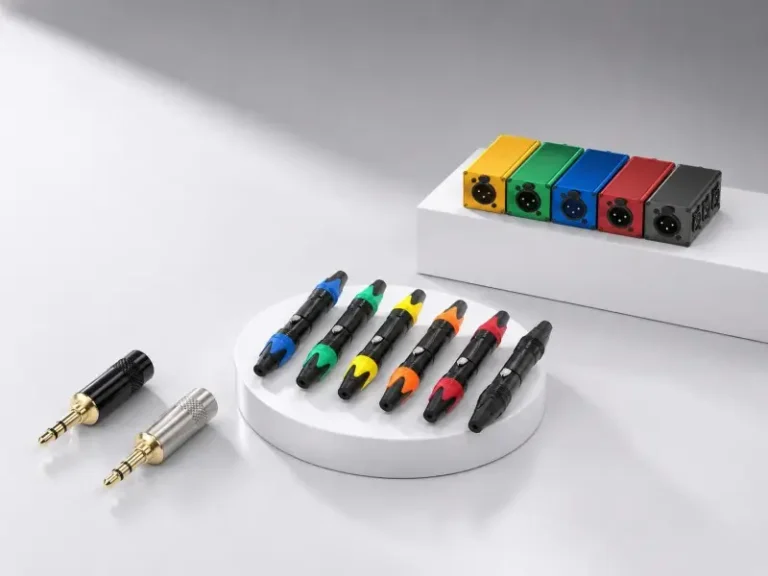
Audio Connector Manufacturer — TRS, XLR & Custom Solutions
Verchil is a professional audio connector manufacturer specializing in TRS and XLR connectors for the balanced and unbalanced transmission of analog audio signals. Trusted by mixing console brands, microphone OEMs, stage equipment integrators, and recording studios worldwide, our connectors serve as the core interface in professional audio, live sound, and broadcasting applications.
With 18+ years of focused experience in audio connector assembly, the Verchil team produces precision-engineered connectors that handle low-level microphone signals, line-level audio, and balanced headphone drives — delivering reliable contact, long mating cycles, and consistent signal fidelity across thousands of insertions.
Whether you need a 3.5mm stereo TRS plug for consumer electronics, a 6.35mm balanced TRS for studio monitors, or a 3-pin / 5-pin XLR connector for microphones and stage cabling, Verchil offers ready-stock SKUs, OEM/ODM customization, and full traceability from raw material to finished product.
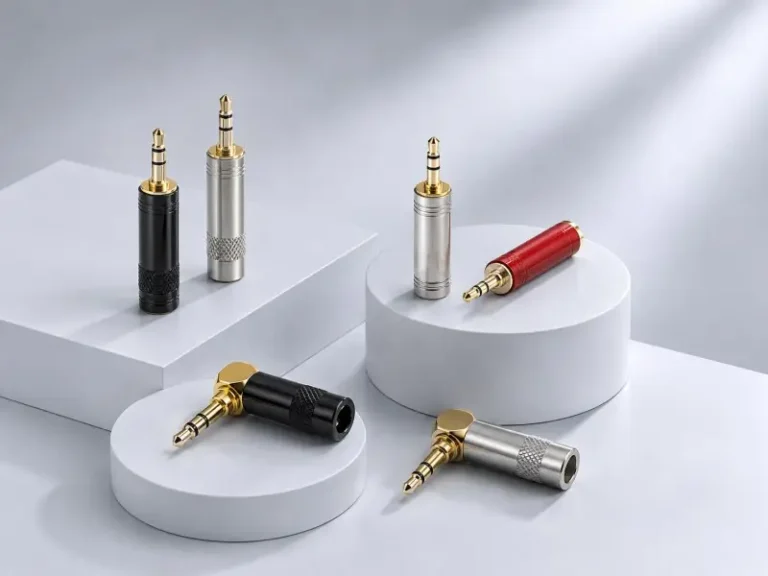
TRS Connector
Three-contact (Tip-Ring-Sleeve) connectors available in 3.5mm (1/8"), 6.35mm (1/4"), and right-angle 90° variants. Used for stereo audio, balanced mono signals, and headphone monitoring across consumer electronics, instrument cabling, and professional audio interfaces.
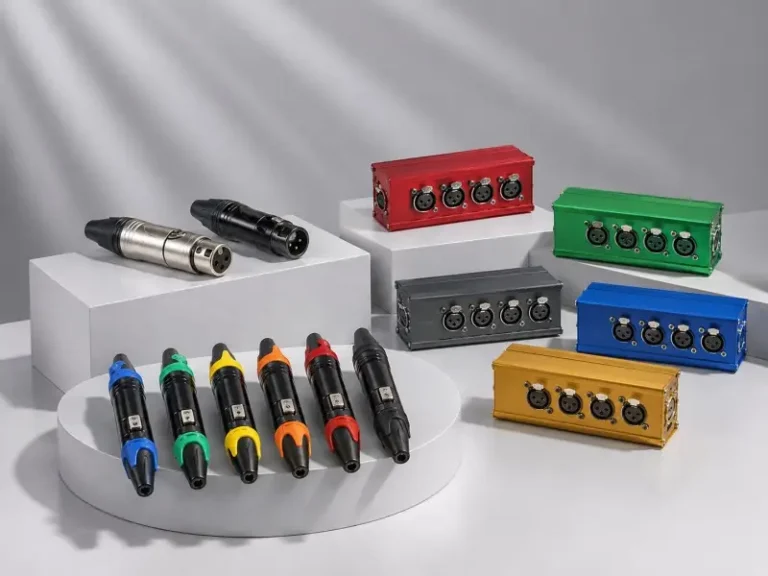
XLR Connector
3-pin, 4-pin, and 5-pin cylindrical connectors with locking latch and electromagnetic shielding. The industry standard for microphones, stage cabling, lighting DMX, and balanced line-level interconnection in live sound and broadcast.

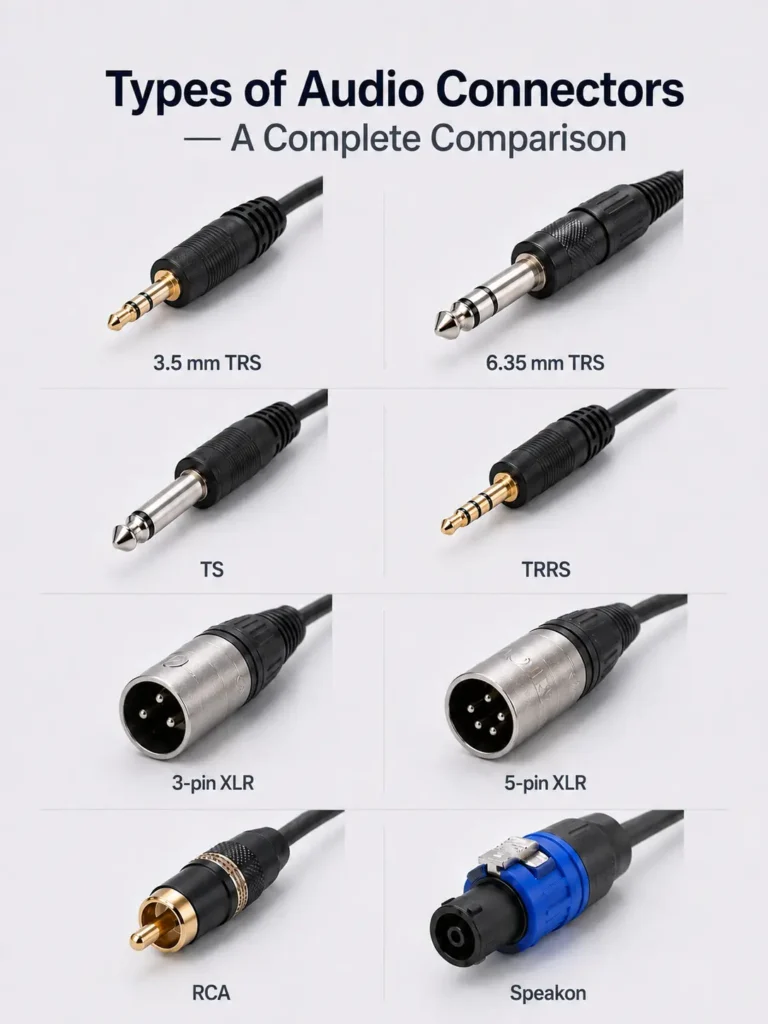
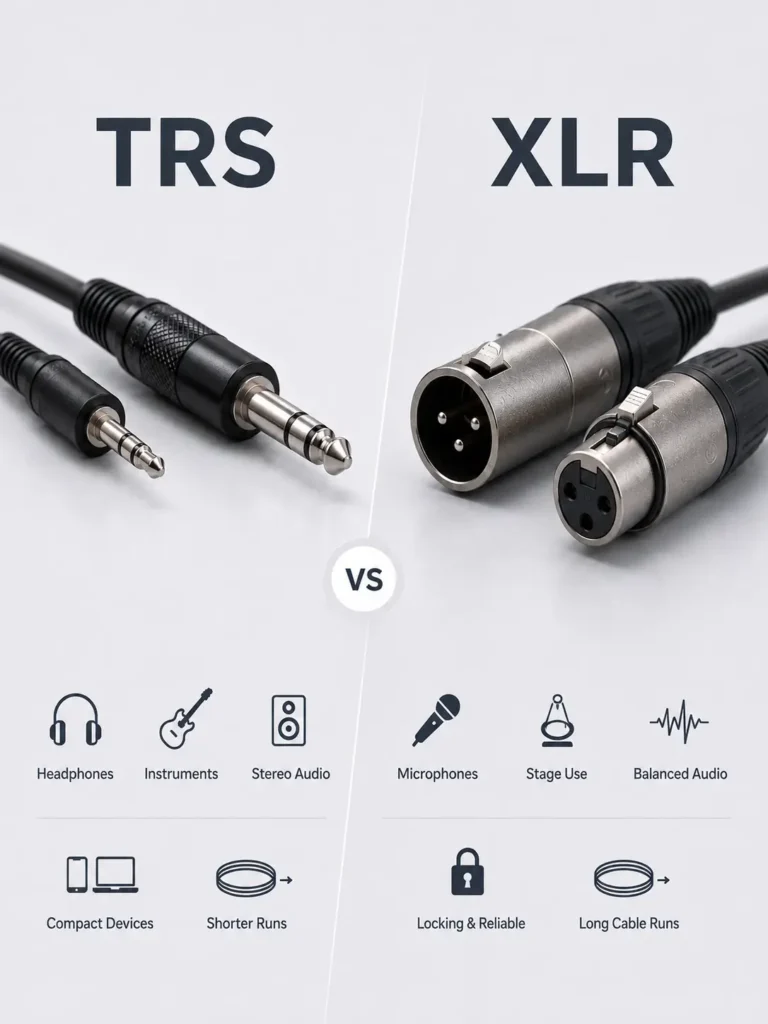


Can I use a TRS cable with an XLR equipment?
Yes, but only with a proper TRS-to-XLR adapter or wiring conversion. The pin assignments must match: TRS Tip → XLR pin 2 (hot), TRS Ring → XLR pin 3 (cold), TRS Sleeve → XLR pin 1 (ground). For full pinout details, see our XLR to TRS Connector guide.
What is the most durable audio connector for stage use?
XLR connectors with metal shells, locking latches, and strain relief are the most durable for live stage environments. Verchil's Neutrik-style 3-pin XLR series is rated for 10,000+ mating cycles and includes a chuck-type cable clamp.
Is 3.5mm TRS the same as 1/8 inch?
Yes — 3.5mm and 1/8" refer to the same connector size. Similarly, 6.35mm and 1/4" are identical, and 2.5mm is approximately 3/32". These dual naming conventions exist because the metric and imperial standards developed in parallel.
Do gold-plated audio connectors really sound better?
Gold plating does not improve sound quality directly — analog audio signals are not affected by plating material at audible frequencies. However, gold plating significantly reduces contact resistance drift over time by resisting oxidation, which means the connector maintains consistent performance over thousands of insertions. For studios, broadcast, and medical applications where reliability over years matters, gold plating is worth the cost.
What is the difference between male and female XLR connectors?
Male XLR connectors (with exposed pins) are outputs; female XLR connectors (with receptacles) are inputs. This convention is consistent across the entire audio industry and prevents accidental signal routing errors. For deeper detail, see XLR Male Connector guide and XLR Female Connector guide.
How do I choose between a 3-pin, 4-pin, and 5-pin XLR connector?
3-pin XLR is the standard for balanced mono audio (microphones, line-level). 4-pin XLR is used for headsets, intercoms, and stereo headphone amplifiers. 5-pin XLR is the standard for DMX lighting control and AES/EBU digital audio. The pin count is determined by the signal type, not by quality.
Can audio connectors carry phantom power?
Yes — XLR connectors are specifically designed to carry +48V phantom power for condenser microphones. The phantom voltage is applied to pins 2 and 3 simultaneously, with pin 1 as the ground return. TRS connectors typically do not carry phantom power in standard configurations.
What's the typical lead time for OEM audio connector orders?
Standard SKUs from Verchil ship in 15 days. Custom OEM orders with branded housings, special pinouts, or assembled cable harnesses typically take 25–35 days, depending on tooling and material availability.
Do you provide samples before bulk orders?
Yes. Verchil provides free samples (1–3 pieces per SKU) for qualified B2B buyers, with the customer responsible for express shipping. For customized samples requiring tooling adjustment, a one-time prototype fee applies and is credited against the first production order.