Suitable for 19 Inch XLR Rack Panel 2-48 Port 1U 2U 3U 4U Patch Mount 2

XLR Rack Panel Manufacturer — D-Type Panels for XLR, SpeakON & PowerCON

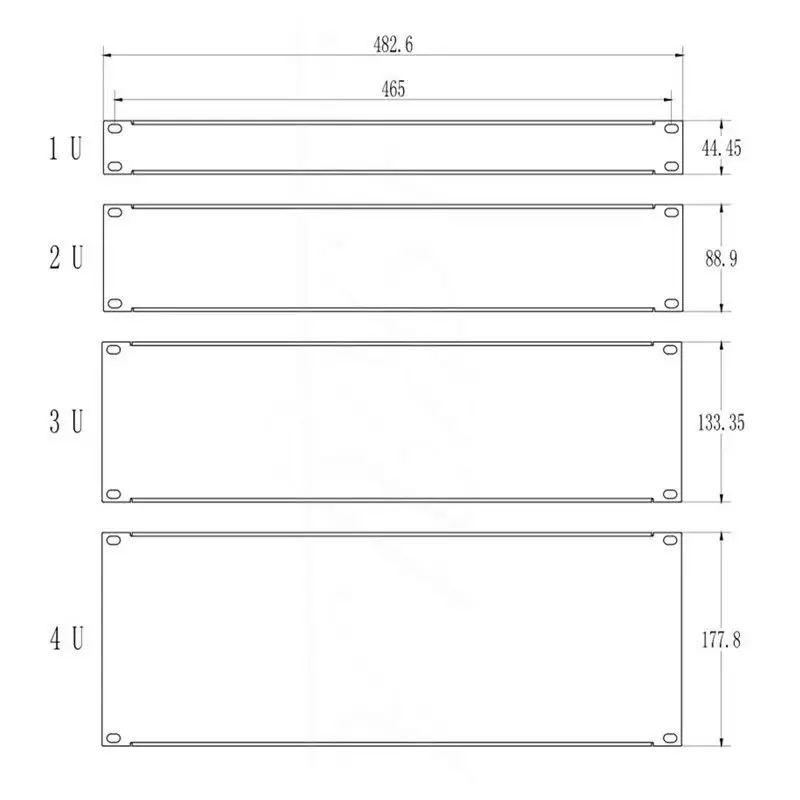
Verchil manufactures 19-inch XLR rack panels in 1U, 2U, 3U, and 4U heights, punched for 2 to 48 ports per panel. Every panel uses one of two cutout options — D-Type or F-Type — and the D-Type cutout accepts XLR, SpeakON, and PowerCON connectors interchangeably, so one panel design covers three connector families. Standard catalog sizes ship in 24–48 hours; custom port counts, row layouts, and finishes ship in 3–4 weeks.
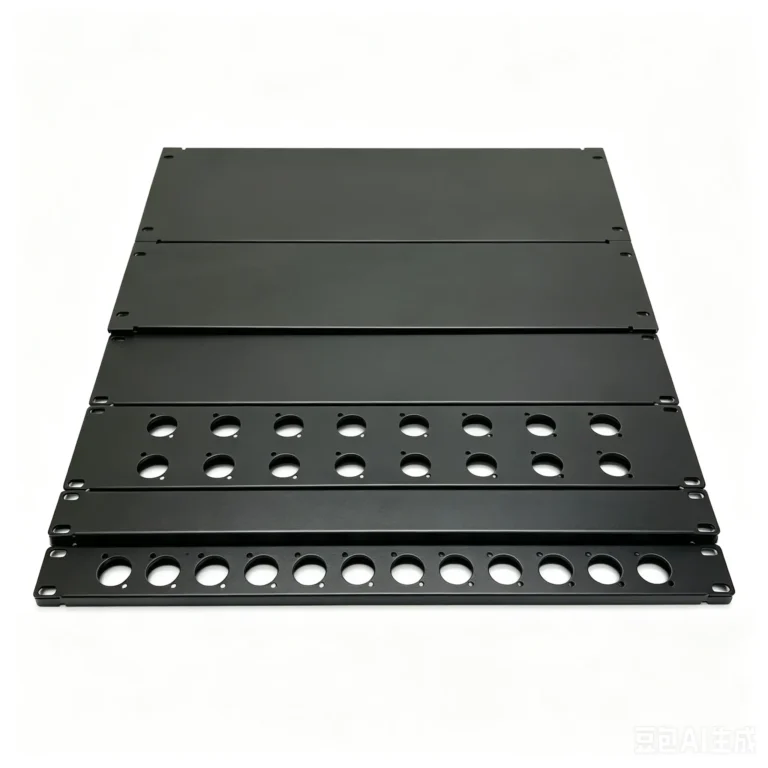
Verchil XLR Rack Panel Series and Specifications

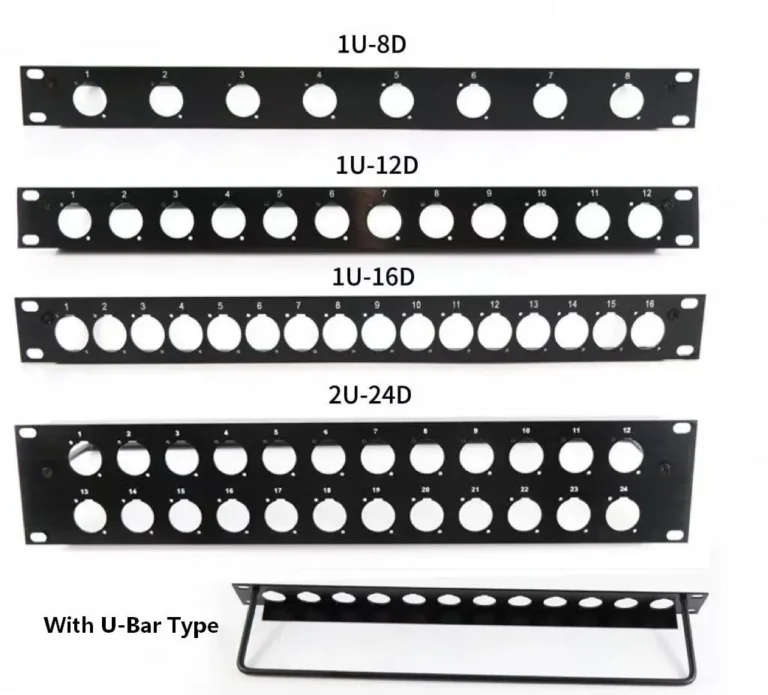
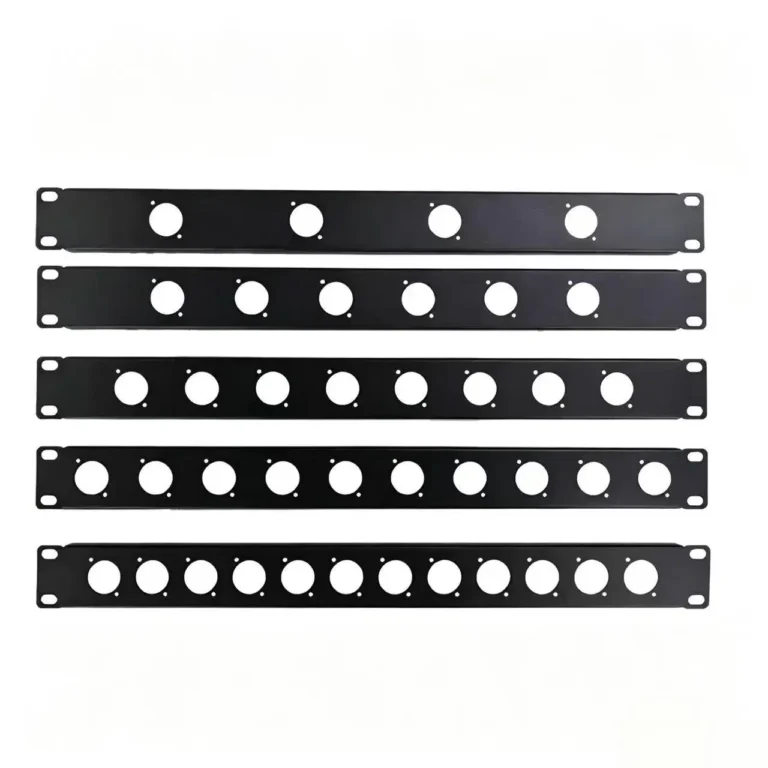
Verchil’s catalog panels cover the port counts and row counts most rental houses and integrators order repeatedly. Every size below is available with or without a cable lacing bar.

 Standard CatalogCustom Configuration
Sizes1U (4/6/8/10/12 port), 2U (24 port)Any port count 2–48, any row count 1U–4U
CutoutD-TypeD-Type or F-Type
Lead time24–48 hours (in-stock)3–4 weeks
Minimum orderLow — standard low-volume orders accepted1,000 units
Lacing barIncluded as an option on every sizeIncluded as an option on every size

The standard sizes cover the layouts most rental and integration jobs already use — if the project needs something outside that list, from a 4U six-row build to a non-standard port spacing, it moves to the custom lane, with the longer lead time and volume minimum that custom tooling requires.

D-Type vs F-Type: Choosing the Right Cutout

Verchil punches two cutout patterns. The difference isn't cosmetic — it determines which connectors physically fit and whether the layout can be customized.

 D-TypeF-Type
CutoutFixed punch patternCustomizable to project spec
Compatible connectorsXLR, SpeakON, PowerCON (shared cutout)Defined per order
Best forStandard catalog sizes, fastest lead timeNon-standard connector families or spacing
CustomizationPort count and row count onlyCutout shape, spacing, and port count

If the project uses XLR, SpeakON, or PowerCON in any combination, D-Type is the faster path — it’s what the standard catalog panels above are built on. F-Type exists for projects that need a cutout the D-Type pattern doesn’t cover.

One Panel, Three Connector Types: XLR / SpeakON / PowerCON Compatibility

The practical payoff shows up over a panel’s service life. A 12-port D-Type populated as an all-XLR mic input today can be repopulated as eight XLR and four PowerCON when the rack changes role — the metalwork stays, only the connectors change, and nothing gets re-punched or re-specified. Because Verchil ships panels and connectors as separate parts in the same box, that swap is a screwdriver job at the rack rather than a new panel purchase.

The shared cutout is the point

1U-8 Pole XLR Rack Panel Patch
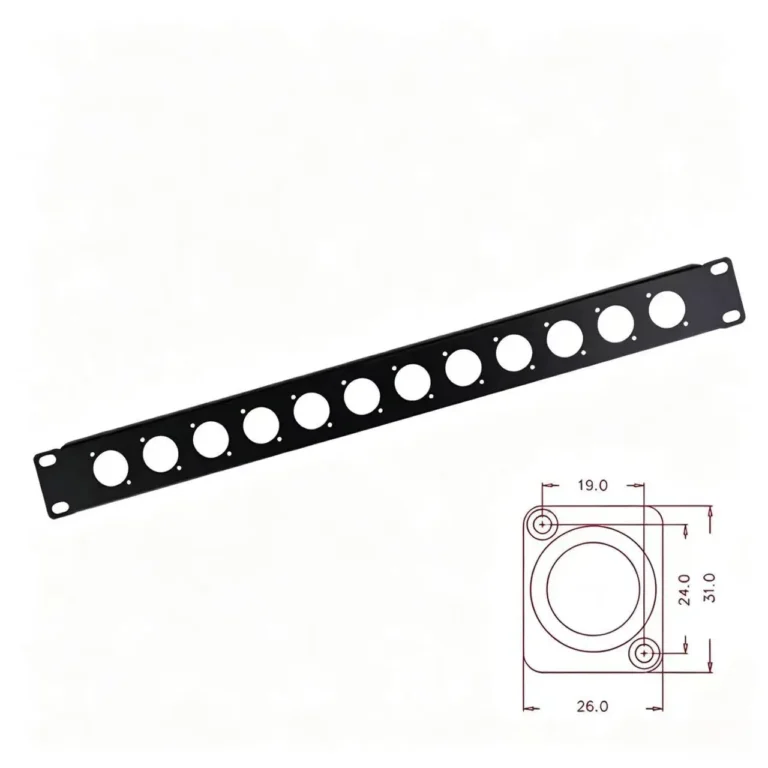
XLR rack panel mounting hole dimensions for D-Type cutout

A D-Type panel doesn’t need to be ordered “for XLR” or “for PowerCON” separately. The mounting pattern — two offset fixing screws around a central connector bore — is identical across all three connector families, so a rental house running mixed XLR mic lines, SpeakON speaker returns, and PowerCON power feeds on the same rack can standardize on one panel part number instead of stocking three.

Panel + Connector Packaging: Why We Ship Unassembled

Verchil ships XLR rack panels and their matching connectors as separate parts in the same box rather than pre-installed. This isn’t a cost-cutting shortcut — it’s a packaging decision based on what happens to bolted-in connectors during a two-leg export shipment.

A connector mounted through a 19″ panel sits proud of the metal on both sides. Once the panel goes into a shipping carton stacked with other freight, that protrusion becomes the first point of contact for every bump, drop, and pallet shift between the factory floor and the customer’s dock. Across Verchil’s export shipments, panels that traveled with connectors already bolted in consistently arrived with more bent pins, cracked chassis housings, and stripped mounting screws than panels shipped flat with connectors boxed separately. Assembly at the install site, where the technician can torque each connector correctly and inspect it before it goes into service, avoids that failure mode entirely.

The tradeoff is a few minutes of on-site assembly per panel. For most integrators mounting the panel into a rack anyway, that step adds no real time to the install.

Why Source XLR Rack Panels from Verchil

Verchil runs die-casting, CNC machining, plating, and assembly under one roof at its Wenzhou facility, which is the same vertical setup behind the XLR, SpeakON-compatible, and PowerCON connectors these panels are built to hold. Three points matter most for a rack panel order specifically:

  • One supplier for the panel and the connectors that go in it. Because Verchil also manufactures XLR and PowerCON connectors, a single purchase order can cover both instead of splitting the sourcing across a panel vendor and a connector vendor.
  • Low MOQ on standard sizes. The catalog panels ship in low volume for integrators testing a new rack build before committing to a full production run.
  • Five-stage QC with lot-number traceability, from incoming material inspection through outgoing AOI, on every production batch — the same process Verchil applies across its connector lines.

What Is an XLR Rack Panel?

An XLR rack panel is a punched sheet-metal plate, sized to EIA-310-D rack dimensions, that mounts chassis-style connectors — XLR, and on Verchil’s D-Type cutout, SpeakON and PowerCON as well — into a standard 19-inch rack or cabinet. The panel itself carries no wiring; it’s the mechanical interface between the connectors and the rack frame, with each port sized to accept a chassis connector’s mounting screws and body bore.

Where Are XLR Rack Panels Used?

  • Stage and touring audio racks — mic input panels, speaker return panels, and power distribution panels mounted side by side in the same rack frame. See Verchil’s Stage Lighting Connector Solutions for how rack-mounted connectors fit into a full stage signal and power chain.
  • Broadcast and AV integration — patch points between studio equipment racks and floor boxes, where panel-mount XLR connectors need a consistent mounting interface across multiple racks.
  • Recording studio patch bays — front-of-rack termination points ahead of a wired patchbay, using the panel as the mechanical mount rather than the signal path.
  • Power distribution racksPowerCON chassis sockets mounted on the same D-Type panel used for signal connectors, so power and signal panels share one part number.
  • Data module panelsRJ45, USB, HDMI, and LC fiber panel-mount modules are built in the same D-Type format, so network, video, and fiber ports can share a panel with XLR lines instead of taking up a separate data panel in the rack.

XLR Rack Panel FAQ

Loader image

D-Type is a fixed cutout pattern shared by XLR, SpeakON, and PowerCON chassis connectors — it's what every standard catalog panel uses. F-Type is a customizable cutout for projects that need a different connector footprint. Most orders use D-Type.

Yes. All three connector families share the same D-Type mounting pattern, so a single panel part number can carry any mix of the three without a different punch tool for each connector type.

Standard catalog sizes accept low-volume orders. Custom configurations — non-standard port counts, row layouts, or F-Type cutouts — require a 1,000-unit minimum.

3–4 weeks from order confirmation. Standard catalog sizes in stock ship in 24–48 hours.

Yes — every port count and every U-height, standard or custom, is available with a cable lacing bar as an option.

Yes, as a custom order. The standard catalog covers 1U panels at 4, 6, 8, 10, and 12 ports plus a 2U 24-port panel; anything outside that — including 3U and 4U builds — goes through the custom configuration lane above.