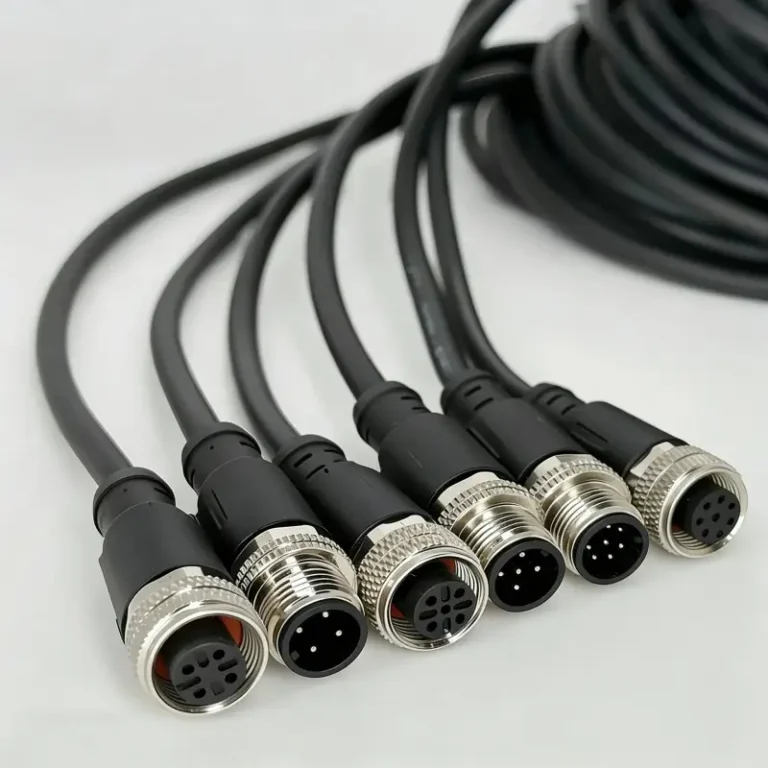
An aviation connector is a rugged, usually circular connector built to keep power and signal stable under vibration, pressure swings, and temperature extremes. The main families are MIL-spec circular types (MIL-DTL-38999, 5015, 26482) for flight, civil GX/SP series for industrial and UAV use, M12 for factory automation, and rectangular heavy-duty connectors for ground equipment. Most are rated IP65–IP68 and lock by thread, bayonet, or push-pull.
Choosing an aviation connector — but unsure whether you need a flight-grade MIL-spec part or a civil GX plug? Pick the wrong family and you either overpay for certification you’ll never use or risk a connection that fails under vibration. So this pillar maps every major type, the specs and standards that define them, how to choose, and where each is used — with links to deeper guides for the formats you care about.
What Is an Aviation Connector (and Why Circular)?
These connectors transmit power and signal data for aerospace, defense, and increasingly industrial use. Unlike consumer connectors, it must survive severe vibration, pressure change, and wide temperature swings while keeping a stable contact.
Most are circular for a structural reason: a round shell distributes mechanical stress evenly, supports strong locking (threaded, bayonet, or push-pull), and packs high contact density without weak points. Consequently, the circular form keeps mating tight even under heavy shock. As distributor TTI’s history of the MIL-DTL-38999 notes, this format spread from military aircraft into countless rugged civil uses. For the sealed civil version Verchil supplies, see our waterproof aviation connector range.
Types of Aviation Connectors
Most selection mistakes happen here, so match the family to the job before anything else. Aviation connectors split into circular and rectangular designs:
- MIL-spec circular (flight grade) — MIL-DTL-5015 (legacy high-current bayonet), MIL-DTL-38999 (modern high-density, triple-start), and MIL-DTL-26482 (compact push-pull). These are defined by U.S. Department of Defense specs such as the MIL-DTL-38999 standard and are the choice for avionics and harnesses. For power-circuit selection, see our aviation power connector guide.
- Civil GX / SP / SL series — the GX12/16/20 family and waterproof SP/SL types bring threaded, vibration-resistant circular connectors to industrial, UAV, and outdoor gear at far lower cost. Our 4 pin aviation connector guide covers the most common civil format and its wiring.
- M12 circular — IEC-standardized (IEC 61076-2-101) for industrial Ethernet and fieldbus in PLC cabinets, where cross-brand interoperability matters.
- Rectangular — modular heavy duty connectors for ground support and machinery, plus D-sub and ARINC 600 racks in cockpit avionics. The snap-latch XLR connector serves stage and audio power/signal.
| Type | Coupling | Typical IP | Primary use |
|---|---|---|---|
| MIL-DTL-38999 | Triple-start thread / bayonet | IP67/IP68 | Military & commercial aerospace |
| MIL-DTL-5015 | Threaded / bayonet | IP67 | High-current legacy, ground |
| GX / SP / SL | Threaded | IP65–IP68 | Industrial, UAV, outdoor |
| M12 | Threaded | IP67 | Industrial sensors & Ethernet |
| Heavy-duty (rectangular) | Lever / screw | IP65–IP69K | GSE, machinery, hangar power |

Key Specs and Standards That Define an Aviation Connector
To specify confidently, know the parameters and the standards behind them:
- Contacts and plating — gold-plated copper alloy keeps contact resistance low and resists oxidation; specify gold for signal and high-cycle contacts, silver for high-current power.
- Shell and finish — aluminum (light, common), stainless steel (corrosion), or composite (lightest); plating options include nickel, zinc-nickel (RoHS), and cadmium for extreme corrosion.
- Environmental sealing — most rate IP65–IP68, and the rating only holds when the connector is mated and locked.
- Mating cycles — civil GX parts run 500–1,000 cycles; MIL-spec and high-cycle interfaces reach far higher.
- MIL-DTL-38999 series — Series I (bayonet, scoop-proof), Series II (low-profile, lightweight), Series III (triple-start, highest performance). Glenair’s MIL-Aero connector reference guide is a solid engineering reference, and Amphenol Aerospace documents the 38999 series in depth.
For temperature and altitude derating math on power circuits, our aviation power connector guide works through the numbers.

How to Choose the Right Aviation Connector
Seven decisions, taken in order, narrow the field quickly:
- Define the workload. Calculate real voltage and current; over-spec adds weight, under-spec risks thermal runaway.
- Assess environmental stress. Salt spray, hydraulic oil, UV, and moisture each push you toward specific shells and IP levels.
- Check EMI needs. Avionics demands shielded shells; a broken screen path corrupts sensitive signals.
- Weigh pin density vs. wiring effort. High density saves space but makes crimping and soldering harder.
- Pick the locking mode. Bayonet or quarter-turn for fast service; screw-thread for high vibration.
- Mind weight. Aluminum, steel, and composite trade weight against strength and corrosion resistance.
- Confirm compliance. Verify RoHS, REACH, and the IP or MIL qualification your market requires.
Because the civil 4-contact format covers so many of these cases, our 4 pin aviation connector guide is a practical next read.
Where Aviation Connectors Are Used
The same rugged design serves very different fields:
- Aerospace and defense — fly-by-wire and avionics harnesses route sensor data and power; MIL-spec circular types dominate.
- UAVs and drones — miniaturized circular connectors cut weight while keeping mil-grade durability for long missions.
- Industrial automation — M12 and GX connectors handle robot arms and production lines, since factory vibration and oil mirror aviation stress.
- Marine and subsea — despite the “aviation” name, stainless or bronze-shell versions resist seawater corrosion and pressure.
- Ground support equipment — rugged rectangular heavy-duty connectors handle hangar power and GSE; explore our industrial connectivity solutions for these cases.

Installation and Maintenance Best Practices
Even the right connector fails if fitted poorly. Three habits protect reliability:
- Inspect before mating — check for bent pins or debris in the shell.
- Torque correctly — use a calibrated wrench on threaded shells; over-tightening crushes the seal.
- Fit the backshell — a backshell gives the harness strain relief so vibration doesn’t pull conductors off the contacts. Where the cable passes a panel, pair it with a proper waterproof cable gland to keep the entry sealed.
Clean contacts periodically with a dedicated contact cleaner to extend service life.
Conclusion
In short, an aviation connector is defined by its job: flight-critical circuits need qualified MIL-spec circular types, industrial and UAV work suits civil GX/SP and M12 formats, and ground equipment leans on rugged rectangular heavy-duty connectors. Decide the family first, confirm the specs and standards, then match plating, sealing, and locking to the environment. Get that sequence right and the connection holds through vibration, altitude, and years of service.
FAQ: Aviation Connectors
What is the difference between a GX16 and a MIL-spec connector?
Both are circular aviation connectors, but they serve different tiers. GX16 is a civil format for industrial and budget projects, while MIL-spec types (such as MIL-DTL-38999) pass far stricter vacuum, thermal-shock, and fluid-immersion testing. Use GX for general industrial work and MIL-spec for flight-critical circuits.
Can aviation connectors transmit high-speed data?
Yes. Modern circular connectors carry Ethernet, Fibre Channel, and USB 3.0 alongside power, all while keeping their rugged sealing and locking. High-density MIL-DTL-38999 inserts in particular support high-speed data modules, which is why they appear in current avionics and radar systems.
Why are aviation connector contacts gold-plated?
Gold resists oxidation almost completely, so it keeps contact resistance low and stable over the connector’s life. Because even a thin oxide layer raises resistance and can cause signal loss, gold plating is specified for signal and high-cycle contacts where reliability is safety-critical.
Are aviation connectors circular or rectangular?
Most are circular, since a round shell handles vibration and high-density contacts best. Rectangular types — heavy-duty modular connectors, D-sub, and ARINC 600 racks — are used where flat panel mounting, very high pin counts, or modular insert mixing matters more than a compact round profile.
Are aviation connectors waterproof?
Many are. Civil and MIL-spec types are commonly rated IP65 to IP68, resisting dust, water jets, and short immersion. However, the rating only holds when the connector is fully mated and locked, so fit a protective cap on any unused panel socket exposed to weather.
What IP rating does an outdoor aviation connector need?
IP67 is the practical baseline for rain and washdown, covering immersion to 1 m for 30 minutes; choose IP68 for continuous submersion or subsea use. For non-sealed indoor panels, IP65 is often enough. Always match the rating to the wettest condition the connector will face.