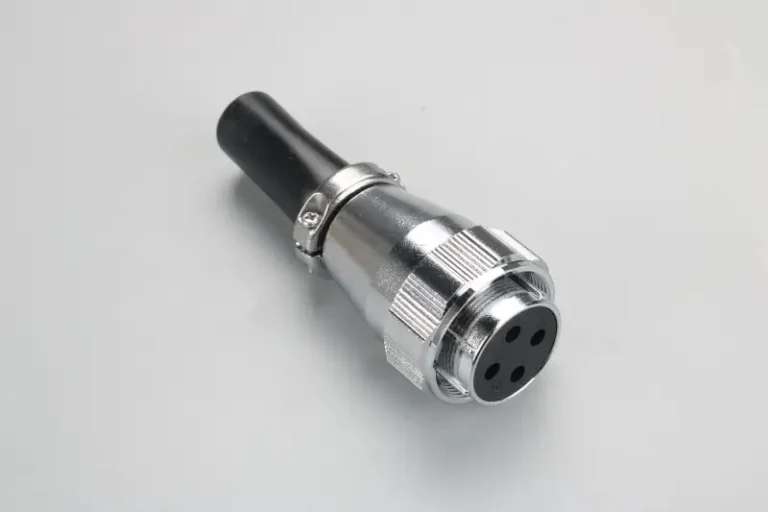
Power connectors aviation systems rely on are almost always circular MIL-spec types. MIL-DTL-38999 Series III is the modern default — triple-start, scoop-proof, and rated to +200 °C with high contact density — while MIL-DTL-5015 stays common for high-current legacy and ground equipment. For ground support and hangar power, modular heavy-duty connectors take over. In every case, derate current 20–30 % for real cabin temperatures before you choose.
Is one wrong connector enough to ground an aircraft? In flight systems, yes — an intermittent power link can cause exactly that. Because the stakes are this high, choosing an aviation power connector is never a casual purchase. So this guide lays out the main MIL-spec types, the specs that actually decide reliability, and how to match a connector to flight, ground, or UAV duty without guesswork.
Power Connectors Aviation: Main Types and MIL-Spec Standards
Circular MIL-spec connectors dominate aviation power connector selection because their geometry delivers mechanical strength, EMI shielding, and a reliable locking mechanism in one shell. Three families cover most needs:
- MIL-DTL-5015 — the long-serving workhorse. Bayonet coupling, shell sizes up to roughly M48, currents up to 100 A. Originally developed for 1930s transport aircraft, it remains common in high-current legacy and ground equipment.
- MIL-DTL-38999 — the modern high-density standard. Its triple-start (Series III) coupling mates fast and resists vibration, with strong sealing and EMI attenuation. As the U.S. Defense Logistics Agency MIL-DTL-38999 specification defines, it spans shell sizes #9–#25 across four series.
- MIL-DTL-26482 — a compact push-pull bayonet type for weight-sensitive secondary and internal avionics circuits.
For a fuller history and series breakdown, the industry reference at ConnectorSupplier is a good primer.
Beyond flight hardware, modular heavy-duty connectors increasingly serve aviation ground applications — ground support equipment (GSE), maintenance panels, hangar power distribution, and de-icing rigs — where fast, repeated mating under field conditions matters more than flight certification. These accept interchangeable inserts mixing high-current contacts (up to ~200 A), signal pins, and data modules in one housing. This is where a manufacturer like Verchil fits honestly: see our heavy duty connector range for GSE and hangar use, not flight-certified parts.
| Type | Coupling | Current | Best fit |
|---|---|---|---|
| MIL-DTL-5015 | Threaded / bayonet | up to 100 A | High-current legacy, ground equipment |
| MIL-DTL-38999 | Triple-start thread / bayonet | per contact, high density | Avionics, harnesses, new designs |
| MIL-DTL-26482 | Push-pull bayonet | moderate | Lightweight secondary circuits |
| Heavy-duty modular | Lever / screw | up to ~200 A | GSE, hangar power, maintenance panels |
Top flight-grade suppliers here are Amphenol Aerospace, TE Connectivity, ITT Cannon, Glenair, and Souriau — not civil GX-style parts.
Key Specs That Decide an Aviation Power Connector
Once the family is chosen, five parameters separate a reliable aviation power connector from a future failure:
- Bus voltage — match the platform: 28 V DC (legacy military and many commercial loads), 115 V AC at 400 Hz (traditional commercial bus), and 270 V DC / 540 V AC on more-electric aircraft such as the 787, A350, and F-35.
- Altitude derating — because air pressure drops with altitude, dielectric strength falls with it. A connector rated 600 V at sea level may only be safe near 300 V at high cruise altitude, so verify the rating at your operating ceiling.
- Temperature derating — datasheets rate continuous current at 25 °C, but avionics bays often run 70–85 °C. At 85 °C most contacts need 20–30 % derating; a 40 A contact should be planned for ~28–32 A.
- Contact resistance — keep power contacts under ~10 mΩ to limit heat; specify gold plating (≥50 µin) for signal and high-cycle contacts.
- Weight and mating life — titanium or composite shells cut 30–40 % versus aluminum, while cycle needs range from ~500 (flight LRUs) to 10,000+ (GSE).
Glenair’s MIL-Aero connector reference guide is a solid engineering reference for these figures. For the compact 4-contact format used on UAVs and lighter equipment, our 4 pin aviation connector guide covers wiring and sizing in detail.

How to Choose the Right Aviation Power Connector
Work through four decisions when selecting an aviation power connector, and the candidate list usually narrows to two or three parts before you open a datasheet:
- Define the environment first. Map installation zone, liquid exposure, altitude, and temperature range — this alone eliminates most series.
- Run the derating math. Start from maximum continuous current, apply a 20–30 % temperature factor, then pick the contact size. When in doubt, size up one step.
- Specify the contact plating. Gold for signal and high-cycle contacts; silver or flash-gold for high-current power contacts; never tin in a vibration environment.
- Verify keying interoperability. MIL-DTL-38999 offers many polarization positions (insert arrangements per MIL-STD-1560), so on multi-vendor projects, attach drawings to the purchase order and confirm both halves match.
For the wider aviation-connector decision framework across signal, data, and power, see our aviation connector ultimate guide.
Where Aviation Power Connectors Are Used
Because the format must survive vibration, altitude, and temperature swings, the aviation power connector appears across both flight and ground systems:
- Avionics and power distribution — 38999 harnesses route primary and secondary power through the airframe.
- Helicopters and UAVs — weight-sensitive platforms favor 38999 and lightweight civil circular types for non-flight-critical lines.
- Ground support equipment — GSE carts, hangar distribution, and de-icing rigs use rugged heavy-duty connectors for fast field mating.
- Maintenance and test benches — high-cycle interfaces need 2,000–10,000+ mating cycles, well beyond flight LRU requirements.
For ground and harsh-environment links where Verchil genuinely supplies, explore our waterproof aviation connector range and broader industrial connectivity solutions.
Conclusion
In short, specifying an aviation power connector comes down to four moves: pick the MIL-spec family that fits flight or ground duty, verify the voltage rating at altitude, derate current for real operating temperature, and lock down plating and keying before purchase. Flight-critical lines belong to qualified MIL-spec brands; ground support, hangar power, and UAV work are where rugged heavy-duty and civil aviation connectors earn their place. Get the sequence right and the interface stays reliable for the life of the platform.
FAQ: Aviation Power Connectors
What is the most common aviation power connector standard?
MIL-DTL-38999 Series III is the most widely used aviation power connector standard across military and commercial aviation. Its high contact density, triple-start bayonet coupling, strong environmental sealing, and broad multi-supplier availability explain its dominance, especially on new airframe designs.
What is the difference between MIL-DTL-5015 and MIL-DTL-38999?
MIL-DTL-5015 is an older, lower-cost bayonet connector optimized for general power and high-current use since the 1930s. MIL-DTL-38999 is a modern design with higher contact density, faster triple-start coupling, better EMI shielding, and superior sealing. New projects usually default to 38999; 5015 still suits non-critical and retrofit circuits.
How do I calculate the correct contact size for a power circuit?
Determine the maximum continuous current, apply a 20–30 % derating factor for the hot avionics environment, then consult the manufacturer’s current table for the shell size and contact configuration. When the result sits between two contact sizes, always choose the larger.
What voltages do aircraft power systems use?
Legacy systems run 28 V DC and 115 V AC at 400 Hz, while more-electric aircraft such as the Boeing 787, Airbus A350, and F-35 add 270 V DC and 540 V AC buses. Always confirm the connector’s voltage rating at your operating altitude, since dielectric strength falls with air pressure.
Can commercial-grade connectors be used in aviation applications?
No, not for flight. Commercial connectors lack the vibration resistance, sealing, contact-plating specs, material traceability, and qualification testing required for flight use. Even for non-flight ground support equipment, aviation-grade or MIL-spec parts are strongly recommended for service life and compatibility.
Are civil GX-style aviation connectors suitable for ground equipment?
For non-flight ground duty — UAV test rigs, hangar accessories, and low-voltage GSE — civil waterproof aviation connectors can be appropriate when their current, voltage, and IP ratings match the job. They are not a substitute for MIL-spec parts on any airborne or flight-critical circuit.